Social Networking Reflection

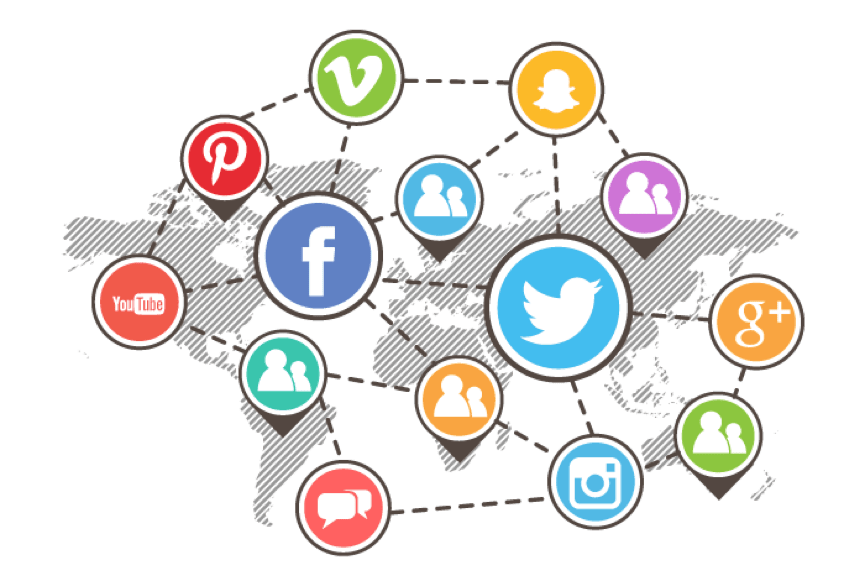
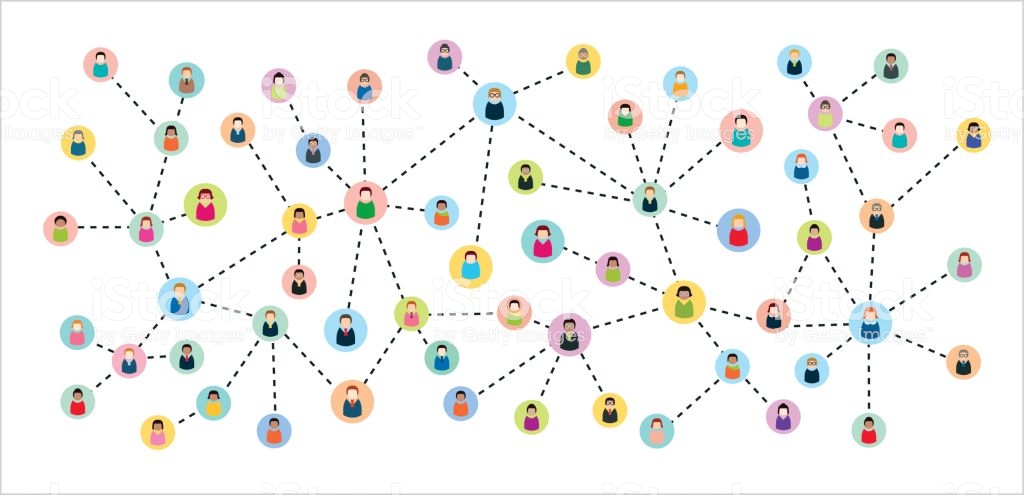
Figure 1. Social Network

Source: https://qds.it/sindaci-siciliani-e-social-network-connessi-e-contenti-ma-attenzione-agli-scivoloni-sul-palcoscenico-del-web/

During the course, we established an online social network through WordPress. In the whole process, I gradually understand the significance of this course. At the end of the course, I would like to share my experience and gains in the last blog, saying goodbye to this course.

1. Knowledge Exchange and Social Network Analysis

In the process of social network establishment, I came to realize the concept of knowledge and knowing in community that the professor mentioned in the first lecture. At the beginning of writing blogs, although I had my own opinions on the issues, all of them are not deep and comprehensive enough. Later, I tried to access my classmates’ blogs for fresh ideas, using comments to exchange different views on the same issue with them. At the same time, some classmates left me helpful and thoughtful suggestions, which effectively pointed out my ignorance and shortcomings.

What impressed me most was that both Luman and I were interested in 4th SDG Quality Education in the second blog, but we analyzed this goal from totally different angles. I objectively proved the importance of quality education from several dimensions, while she elaborated her ideas by telling a story about her friend, which is more persuasive and appealing. I really like the way she expresses herself and the story she experienced. 

Social network analysis reflects my performance in knowledge interaction. The value of out-degree of the node representing me is as high as 15, which means that I am active in the existing social network and highly engaged in comments, actively exchanging knowledge with others. In addition, I also get a lot of feedbacks from my classmates. This feature can be reflected by the fact that the value of in-degree of node representing me reaches 8. However, I found that I am probably not in the center of the social network because the value of betweenness centrality is quite small, just 0.04. This reminds me to focus on expanding my social circle beyond a small one.

2. Comment Feedback and Sentiment Analysis

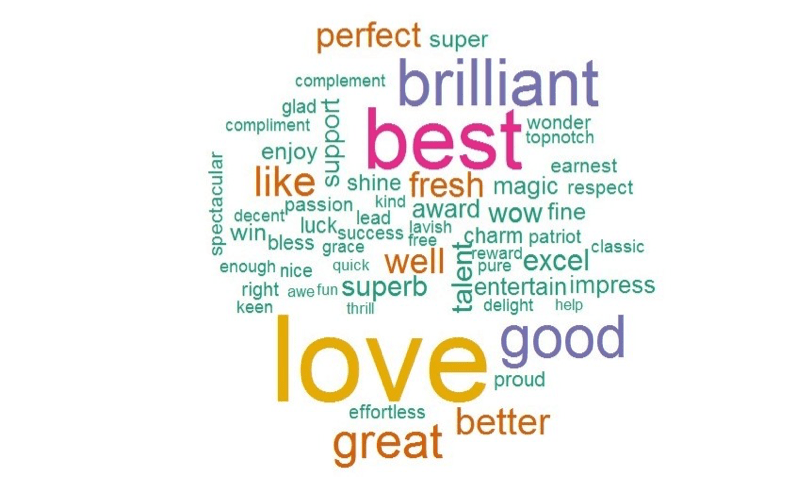
All of my blogs have received a total of 21 comments since they were published. Using dictionary-based sentiment analysis, I got a score of 0.0424. To be specific, the total number of words involved in the comments reached 1,577, while 87 positive and 20 negative keywords appeared in the dictionary. As a result, I found that most of these comments agree with the points proposed in my blog, which proves that my blog content is valuable. However, there were a few skeptical responses. I gave a more detailed explanation of these questions and denials, which I think is also a great communication opportunity. In this social network, I learned how to use text analysis technology to make emotion judgment, deeply understanding its principle and meaning.

3. Teamwork and Case Study

A meaningful experience for me to remember! In the final group project, I worked with my teammates to complete a case analysis of unemployment, which is related to 8th SDG. We chose this goal based on common interests, Decent Work and Economic Growth. By analyzing the selected case, we fully mastered how researchers apply the knowledge involved in this course to solve SDG issues. What’s more, our team cooperation is really enjoyable!

How to Improve Education Using SMA?

Quality education is a key issue that countries around the world are paying attention to in the process of sustainable development. In the recent years, with the maturity of Internet technology, social media networks have begun to be used in the education field, aiming to improve the efficiency of traditional teaching. Some industry reports show that Internet users spend an average of 2 hours a day creating social data on these platforms. Against this background, if we can use and analyze these social media data reasonably, we will be able to find effective ways to improve education through the potential information behind the data. Today, I’d like to talk to you about how social media analytics can be used effectively in quality education to promote the realization of the world’s sustainable development goals.

Figure 1 Education and Social Media
(Source: https://www.nichemarket.co.za/blog/nichemarket-advice/social-media-manager-checklist)

1. Analyze the education popularity and gender differences

Using data on user posts and comments collected by Facebook, Twitter and other major social media platforms, researchers can extract relevant information about education and analyze the sources in detail. For example, by combining the geographical distribution of authors and the text content, we can obtain how people in different countries view education and the current educational development in those countries. In addition, by classifying the information according to the user’s gender, we can further understand the male and female views on education in various regions, assessing the gender and regional differences in detail. This can help educational institutions to find the groups and regions that are currently blind to education, so as to take publicity and basic popularization measures to enhance the local citizens’ awareness on the importance of education.

2. Evaluate the teaching environment and infrastructure construction

Social media platforms cover a wide range of countries, involving a variety of languages. Thus, Schools in different countries can use the sociality of social media to set up exclusive accounts on public social platforms to collect opinions and suggestions from teachers and students. After integrating these suggestions with the help of social media analysis technology, schools may find out the problems existing in school teaching conditions and facilities, which can be improved then. For example, a school canteen has fewer dining places, but school administrators are not aware of this defect. However, through social media, the school can view a large number of negative feedbacks related to the canteen, and the problem can be directly found by using analysis technology. Through the evaluation of teachers and students on the social platform, school leaders can regularly evaluate the development of various schoolwork, optimize the teaching environment, and improve the satisfaction of teachers and students at last.

3. Understand students’ interests and emotional orientation

Social media platforms have very rich functions. It can use text to quickly process the sent information and realize the fast upload of picture, even quickly spreading the video on the network. At present, many students prefer to share their feelings through social platforms. Therefore, in the implementation of traditional education, schools can obtain information related to students’ thinking and psychology through social listening. With the continuous expansion of the use of social platforms, if social sentiment analysis technology is actively used in the field of education, it can make every educator pay attention to the psychological changes and inner emotions of students. On the one hand, teachers can search and analyze media data to find topics that students are interested in, and reasonably introduce these hot topics in the production of educational materials and teaching videos to stimulate students’ enthusiasm for learning as much as possible. This will also make students aware of the inseparable relationship between learning and real life, so that every educated person can cherish the opportunity to receive education. On the other hand, according to the learning situation of students obtained from the platform data, teachers can implement hierarchical teaching activities for different students’ problems in actual teaching. In this way, more students can be integrated into the learning process. Thus, the rational use of social media analytics can help schools improve teaching standards and establish good teacher-student relationships.

Reference:

[1] Big Data and Social Media to Improve the Quality of Higher Education https://www.ijcsmc.com/docs/papers/March2016/V5I3201699a1.pdf

[2] Social media data analytics: How to apply them in education https://www.ibmbigdatahub.com/blog/social-media-data-analytics-how-apply-them-education

[3] The Use of Social Networking to Improve the Quality of Interprofessional Education  https://www.ncbi.nlm.nih.gov/pmc/articles/PMC3806958/

Quality Education: The Key to Sustainable Development

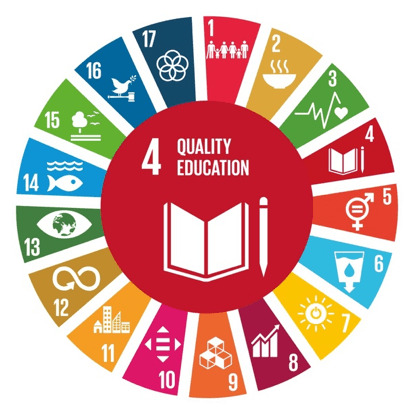
Figure 1 4th Goal: Quality Education
(Source: http://www.iacdglobal.org/2019/11/13/the-sustainable-development-goals-and-disability/)

The 17 Sustainable Development Goals and 169 specific goals proposed by the UN General Assembly in September 2015 take into account three important aspects of sustainable development: economic, social and environmental. Among them, I pay more attention to the fourth goal, Quality Education. I believe that this goal can build a solid foundation for sustainable development and help other goals be better and faster achieved.

According to World Inequality Database on Education statistics[1], less than 50% of poor children in 39 countries have completed primary education. At the same time, in 30 countries worldwide, there are serious imbalances in the proportion of males and females completing junior high school education, of which women are vulnerable groups. One piece of statistic data clearly states that at least 25% of poor young women are uneducated in 35 countries worldwide. These monotonous statistics above have far-reaching significance, which reveal current various problems in education in terms of education popularity, gender, language and age. Therefore, it is imperative to promote quality education.

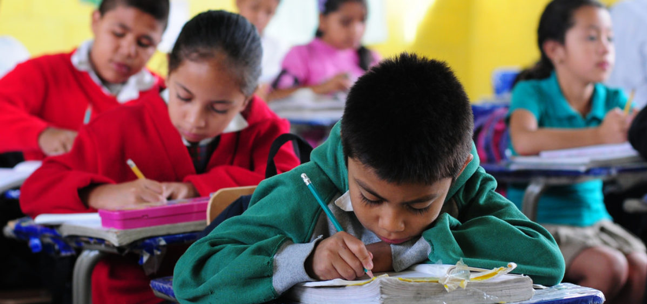
Figure 2 Children are Educated
(Source: https://www.globalacademicforum.org/the-six-as-of-quality-education/)

We should make it clear that education is not simply a matter of reading to the test, but a long process of shaping one’s knowledge system and changing one’s perception of the world through continuous learning. Only by mastering knowledge can we have the ability to promote the economic and cultural development of the society and to change the surrounding environment. So, what is quality education? In my opinion, quality education is actually a tool to help people break the cycle of poverty and achieve gender equality. It is also an important means to maintain social order and social equity. If education is to teach children how to use knowledge and skills wisely and how to treat the society properly, then quality education is to enable every child to enjoy the right to such education, which means that they can receive preprimary education, intermediate or even higher education. This is the basic requirement of 4th Goal of the Sustainable Development Goals, which is to achieve by 2030 that all boys and girls can complete free and high-quality fundamental education.

However, quality education is not just about universal education. It must focus on high quality. First of all, it needs to improve the lack and imbalance of existing educational resources, so as to ensure that children in poor areas can also have the opportunity to receive the same level of education as in developed areas. Secondly, quality education is aim at further improving the school’s running conditions and infrastructures to provide students with a comfortable learning environment. Finally, quality education should ignore the gender differences between men and women so that it can fundamentally make up for the misunderstanding of education caused by previous gender inequality.

What is the significance of Quality Education to sustainable development? Quality education can lay the foundation for the other 16 goals. In other words, without the guarantee of quality education, the achievement of the Sustainable Development Goals will be limited. For example, quality education can provide the poor with the knowledge base to escape poverty, thereby driving the achievement of Goal 1 No Poverty. Quality education can also enable everyone to live independently and master some basic vocational skills to get rid of hunger and employment difficulties. (According to data from 114 countries from 1985 to 2005, an additional year of education will reduce the Gini coefficient by 1.4%.) This will serve Goal 2 Zero Hunger and Goal 8 Decent Work, offering them possibilities. In addition, quality education can promote gender equality and help vulnerable groups facing discrimination, such as women and people with disabilities. Thus, to some extent, the gender equality issues mentioned in Goal 8 are addressed.

Figure 3 Quality Education
(Source:https://twitter.com/education2030un/status/1077559844905803778)

All in all, we need to understand the importance of quality education and think about how to solve the current educational disadvantages at the level of social practice. Finally, I would like to conclude this article with a quote from the Secretary-General of the United Nations, Ban Ki-moon:

Education must fully assume its central role in helping people to forge more just, peaceful and tolerant societies.

 Ban Ki-moon, Secretary-General of the United Nations

Reference:

[1] World Inequality Database on Education: https://www.education-inequalities.org

[2] What do we mean by a quality education?: https://www.huffpost.com/entry/what-do-we-mean-by-a-qual_b_9284130

[3] Quality Education: Why it Matters?: https://www.un.org/sustainabledevelopment/wp-content/uploads/2017/02/4.pdf

[4] What do we mean by “Quality Education”?: https://www.concernusa.org/story/quality-education/

What is social media analytics?

Q1: What is social media?

Before diving into social media analytics, let us talk about what social media is. In short, the word social means interacting with individuals by sharing and receiving information, and media is the carrier of information. Thus, social media is a virtual network platform that contains social interaction information. For example, Weibo, WeChat, Facebook, Instagram, etc. Anyone can publish or share own views and ideas in rich forms on these social platforms, which I think is the most obvious difference between social media and other traditional mass media.

Figure 1 the Social Media Collection
(Source: https://www.searlesgraphics.com/social-media-marketing)

Q2: Understanding of social media analytics

Please imagine a scenario: you will travel with your good friends this summer vacation, and now you need to determine the destination, what will you do? I guess, you might visit a travel website or application to learn about the current popular tourist attractions at the beginning. Then, you will browse travel guides and views written by people who have been to these places before. Finally, you and your friends make the itinerary based on public opinions. In fact, you have already performed a simple social media analysis after completing this series of actions.

Through the above case, I explained the title in a plain way, but the application scenarios of social media analytics are mostly focused on business research rather than personal occasions. The academic explanation of this term is that social media analytics refers to the practice of collecting data from social media platforms and analyzing the data to help decision makers solve specific issues.[2] In my opinion, social media analytics is a process that sifts huge amounts of social data by social analysis tools to understand thoughts and preferences of a target crowd about specific things or events. On this basis, companies and researchers can analyze and obtain some valuable information by mining these data, thereby helping them optimize their products and propose optimal marketing strategies.

Figure 2 Social Media Analytics
(Source: https://www.netbase.com/blog/complete-social-media-analytics-guide/)

Q3: Components of social media analytics

There are several components that play an important role in social media analytics:

1. Social Media Metrics

Figure 3 Social Metrics Forms
(Source: https://dsim.in/blog/2017/10/12/6-metrics-track-facebook-twitter-success/)

As data on the Internet becomes larger and more socialized, it is difficult for people to judge the relevance of data intuitively and accurately. Meaningful social media indicators, such as reach, engagement, acquisition, conversion, activity, can help you effectively evaluate your current job and drive brand decisions. Comprehensive evaluation and selection of reasonable social metrics can improve the accuracy of analysis with effect, avoiding misleading by simple counting.

2. Social Listening

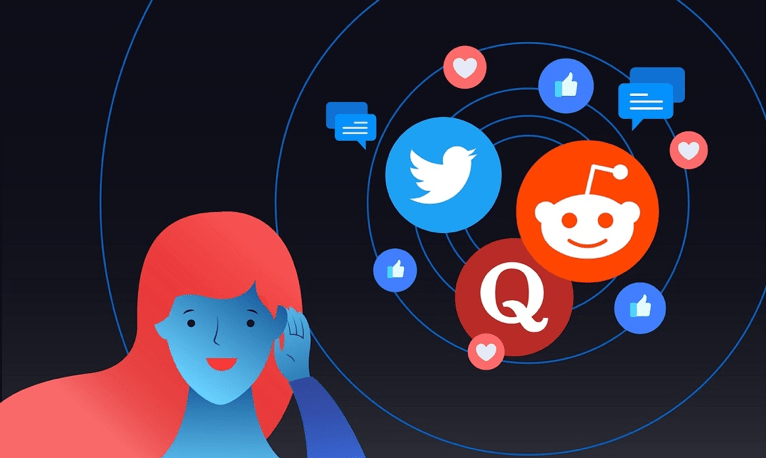
Social listening refers to listening to researcher-related content and meaningful topics on the Internet published by social population through social media. The listening data is nuanced feedback on individual behaviors in social media, which can help researchers portray user portraits. For example, from a business perspective, social listening can help companies understand current hot topics and their influence, and further explore the factors that attract consumers. Ultimately, social listening will help companies achieve their branding and customer relationship goals.

Figure 4 Social Listening Explanation Picture
(Source: https://nightwatch.io/blog/social-listening)

3. Sentiment Analysis

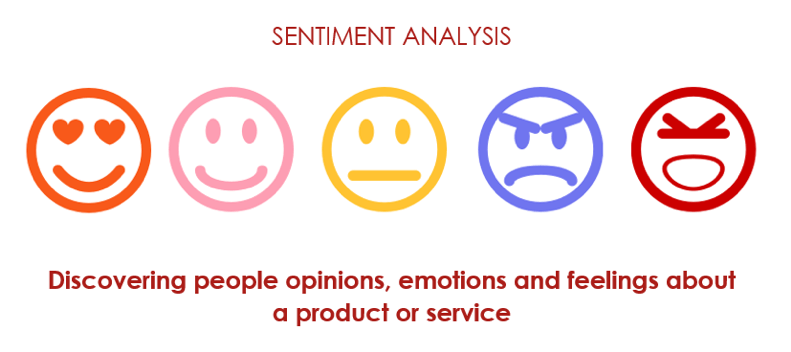
Sentiment analysis is the process of analyzing, processing, inducing, and inferring subjective text with emotions using NLP and text mining techniques. Social sentiment derived from sentiment analysis can help us judge the emotional tendency of hot topics obtained by social listening, accurately indicating whether it is positive or negative. This allows researchers to take precautions against possible crises early.

Figure 5 Sentiment Example: Positive
(Source: https://www.analyticsvidhya.com/blog/2017/03/measuring-audience-sentiments-about-movies-using-twitter-and-text-analytics/image2-12/)

Figure 6 Sentiment Emotions Level
(Source: https://rpubs.com/yashvit/271742)

Conclusion

In a word, social media analysis is not simply referring to data mining and data statistics. It is the comprehensive application of machine learning and semantic analysis technology to the mining, analysis, induction and further reasoning of social data. Through social media analysis, we can thoroughly understand the deeper sense of truth behind the social behavior of users from a rational and emotional perspective, thereby providing solid data support for our next business or personal decision.