
Q1: What is social media?
Before diving into social media analytics, let us talk about what social media is. In short, the word social means interacting with individuals by sharing and receiving information, and media is the carrier of information. Thus, social media is a virtual network platform that contains social interaction information. For example, Weibo, WeChat, Facebook, Instagram, etc. Anyone can publish or share own views and ideas in rich forms on these social platforms, which I think is the most obvious difference between social media and other traditional mass media.
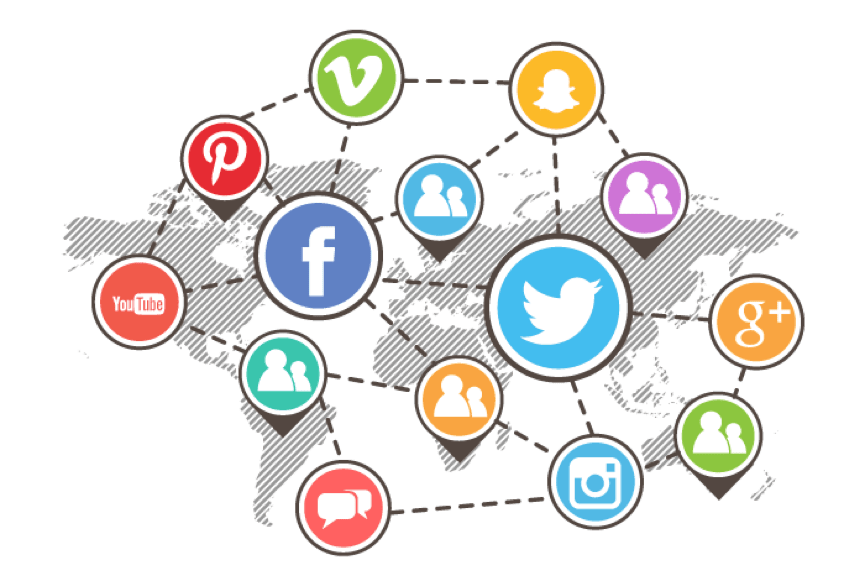
Figure 1 the Social Media Collection
(Source: https://www.searlesgraphics.com/social-media-marketing)
Q2: Understanding of social media analytics
Please imagine a scenario: you will travel with your good friends this summer vacation, and now you need to determine the destination, what will you do? I guess, you might visit a travel website or application to learn about the current popular tourist attractions at the beginning. Then, you will browse travel guides and views written by people who have been to these places before. Finally, you and your friends make the itinerary based on public opinions. In fact, you have already performed a simple social media analysis after completing this series of actions.
Through the above case, I explained the title in a plain way, but the application scenarios of social media analytics are mostly focused on business research rather than personal occasions. The academic explanation of this term is that social media analytics refers to the practice of collecting data from social media platforms and analyzing the data to help decision makers solve specific issues.[2] In my opinion, social media analytics is a process that sifts huge amounts of social data by social analysis tools to understand thoughts and preferences of a target crowd about specific things or events. On this basis, companies and researchers can analyze and obtain some valuable information by mining these data, thereby helping them optimize their products and propose optimal marketing strategies.

Figure 2 Social Media Analytics
(Source: https://www.netbase.com/blog/complete-social-media-analytics-guide/)
Q3: Components of social media analytics
There are several components that play an important role in social media analytics:
1. Social Media Metrics

Figure 3 Social Metrics Forms
(Source: https://dsim.in/blog/2017/10/12/6-metrics-track-facebook-twitter-success/)
As data on the Internet becomes larger and more socialized, it is difficult for people to judge the relevance of data intuitively and accurately. Meaningful social media indicators, such as reach, engagement, acquisition, conversion, activity, can help you effectively evaluate your current job and drive brand decisions. Comprehensive evaluation and selection of reasonable social metrics can improve the accuracy of analysis with effect, avoiding misleading by simple counting.
2. Social Listening
Social listening refers to listening to researcher-related content and meaningful topics on the Internet published by social population through social media. The listening data is nuanced feedback on individual behaviors in social media, which can help researchers portray user portraits. For example, from a business perspective, social listening can help companies understand current hot topics and their influence, and further explore the factors that attract consumers. Ultimately, social listening will help companies achieve their branding and customer relationship goals.
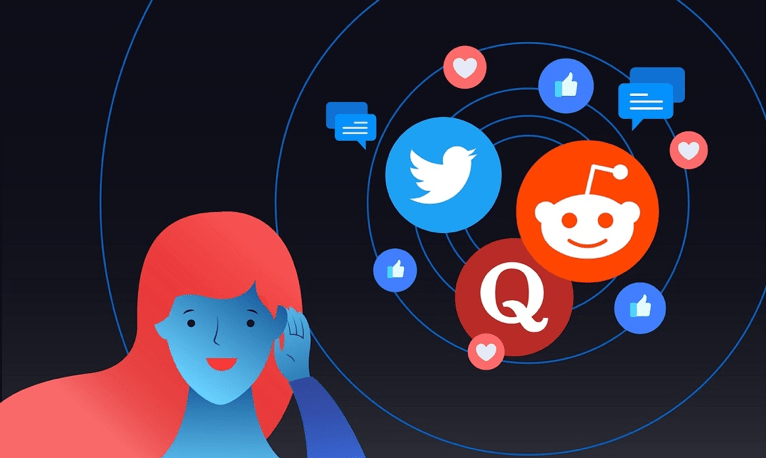
Figure 4 Social Listening Explanation Picture
(Source: https://nightwatch.io/blog/social-listening)
3. Sentiment Analysis
Sentiment analysis is the process of analyzing, processing, inducing, and inferring subjective text with emotions using NLP and text mining techniques. Social sentiment derived from sentiment analysis can help us judge the emotional tendency of hot topics obtained by social listening, accurately indicating whether it is positive or negative. This allows researchers to take precautions against possible crises early.
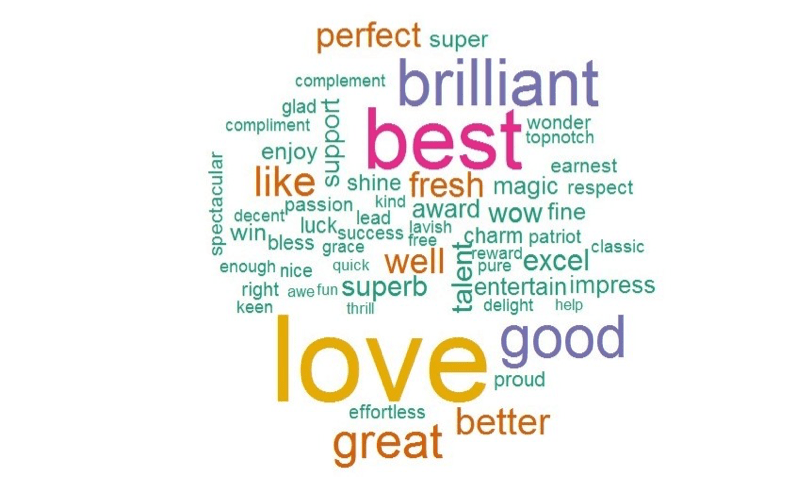
Figure 5 Sentiment Example: Positive
(Source: https://www.analyticsvidhya.com/blog/2017/03/measuring-audience-sentiments-about-movies-using-twitter-and-text-analytics/image2-12/)
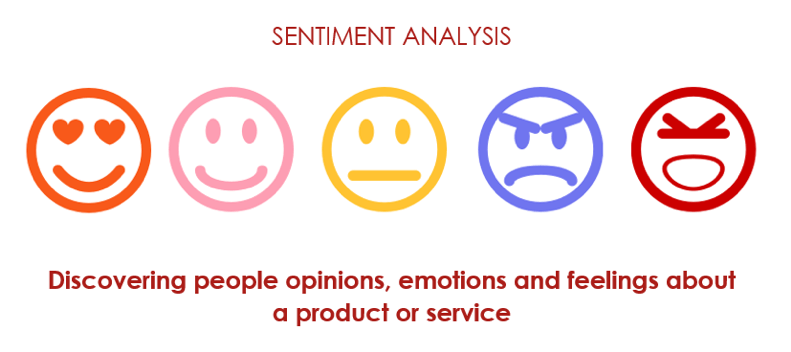
Figure 6 Sentiment Emotions Level
(Source: https://rpubs.com/yashvit/271742)
Conclusion
In a word, social media analysis is not simply referring to data mining and data statistics. It is the comprehensive application of machine learning and semantic analysis technology to the mining, analysis, induction and further reasoning of social data. Through social media analysis, we can thoroughly understand the deeper sense of truth behind the social behavior of users from a rational and emotional perspective, thereby providing solid data support for our next business or personal decision.
 Lynne's Social Lab
Impressive article. I look forward to your next article.
LikeLike
HIHIHI,YY! This is Lumannn!
Ah!I finally got into your blog, what a hard journey!🐷
OK,focus on your article! Firstly, I like your layout and pics, all of them are cute like you and also clear to read. And I hope you have a happy face like the “pink face” in the last pic all the time!😜Then, you let me imagine a scenario that I have a journey with my friends, and we have to check and decide where to play and what to enjoy, it’s so real! So, social media analytics is everywhere, everybody is a social media analyst. It’s so interesting! Maybe we can cosplay social media analysts on future trip to Taiwan.
Wish you have a niiiiiiiiice 2020!🎈
LikeLiked by 1 person
So hard~ hahahaha🤣 You are so sweet🥰, I am looking forward to our future trip all the time!!!
LikeLike
Wow, your article is so amazing!
Intuitively, this article looks very rich, there are many beautiful pictures, and the layout is very clear too! You gave a very lifelike example about tourism, which is exactly the problem that many of us will encounter. Through this example, I have a deeper understanding of the concept of social media analysis and its role. I like this vivid example!
Hope you enjoy your holiday and looking forward to your next article~
LikeLiked by 1 person
>3< Thanks for your thoughtful comments! Best wishes~~
LikeLike
Your opinion is very brilliant,I totally agree with you.Social media analytics is a comprehensive project.
LikeLike
I totally agree with you! Social media analytics is a very comprehensive project.
LikeLike
Yeah~ Thanks for your comments!☺️
LikeLike
Your page layout is great, and I first learned the term social listening, I benefit a lot!
LikeLike
Wow! A really detailed introduction on social media analytics! The author chose the FAQ style as the writing mindset, which really give us more interest when we are reading the article, because these are questions that we might ask. And colorful pictures also more readable. Really good reading experience!
LikeLike
Unique style of arrangement, there are many pictures, the true intentions of writing! Clear logic, step by step in depth, and even gave detailed examples, this is the best article!
LikeLike